Having spent over half of my teaching career as the Founder and Director of the Student Success Program at Burr and Burton Academy, I observed firsthand the profound impact trauma can have on executive functioning. These experiences served as the cornerstone for founding Onward Rising and establishing the CORE Confidence Program. As I continue progressing through the NBEFC curriculum this week, I encountered further empirical research reinforcing my practical experience.
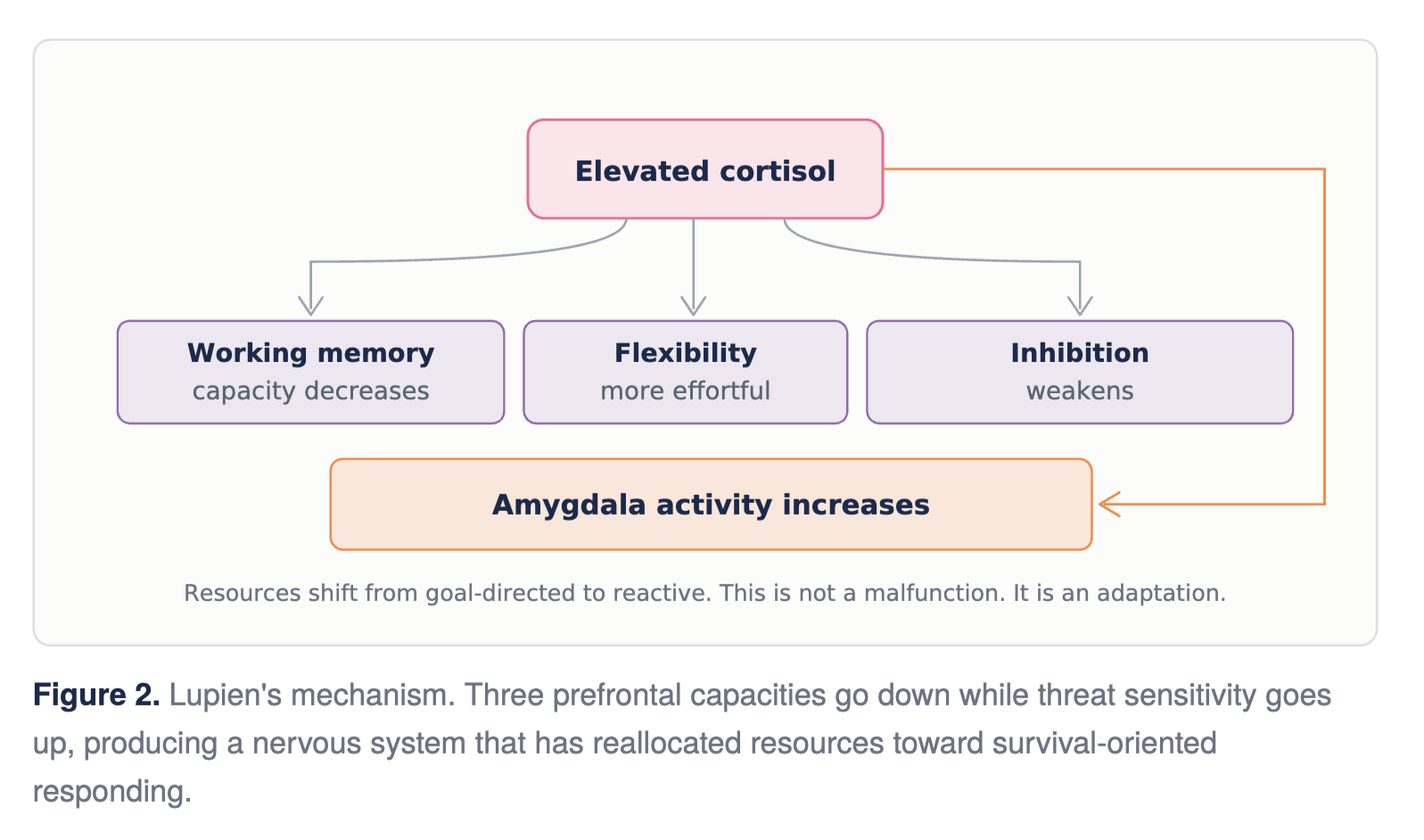
The accompanying graphic illustrates how Dr. Sonia Lupien delineates the mechanism through which elevated cortisol directly impairs executive functions in the prefrontal cortex. Her findings align closely with the work of researchers such as Dr. Bessel van der Kolk (author of The Body Keeps the Score) and Dr. Peter Levine (author of Waking the Tiger), who identified these trauma responses as adaptive survival mechanisms. In response to stress and trauma, neural resources prioritize reactive survival processes over the proactive, goal-oriented cognitive functions mediated by the prefrontal cortex.
When working with students, I often guide them to understand how the amygdala responds to perceived stress by releasing stress hormones, which can suppress prefrontal cortex activity. This neurobiological response—frequently described as an physiological activation as if facing an immediate physical threat—can be triggered by everyday stressors. While most of us don’t actually face a charging tiger in our everyday lives, our can body still responds with this level of severe alert. A critical text message from a friend, an insensitive remark from an educator, or a dismissive response from a parent can all register internally as acute emergencies.
An effective strategy for restoring emotional regulation is pausing to evaluate the stimulus objectively. By recognizing that the situation does not pose a true physical danger, students can understand that their response is a temporary amygdala hijack. With this perspective, individuals can transition from reactive, instinctual responses to proactive problem-solving, re-engaging the prefrontal cortex to navigate challenges effectively.
Ultimately, understanding the neurobiology of stress transforms how we approach executive function coaching. By helping students recognize when they are experiencing an amygdala hijack, we move away from frustration and toward self-compassion and effective problem-solving. Equipping learners with the awareness that they can pause, evaluate, and re-engage their prefrontal cortex is one of the most powerful gifts an educator or coach can provide; empowering them to navigate everyday challenges with resilience and clarity.